
The development of Hankkija’s new product, ProHumi® Farm – a feed material that also serves as enrichment for piglets, sparked our ambition to deepen our understanding of the psychological and physiological wellbeing of farm animals. This led us to the 7th annual meeting of the European Veterinary Congress of Behavioural Medicine and Animal Welfare, an excellent opportunity to gain up-to-date insights into animal welfare research.
A global meeting point for animal welfare science
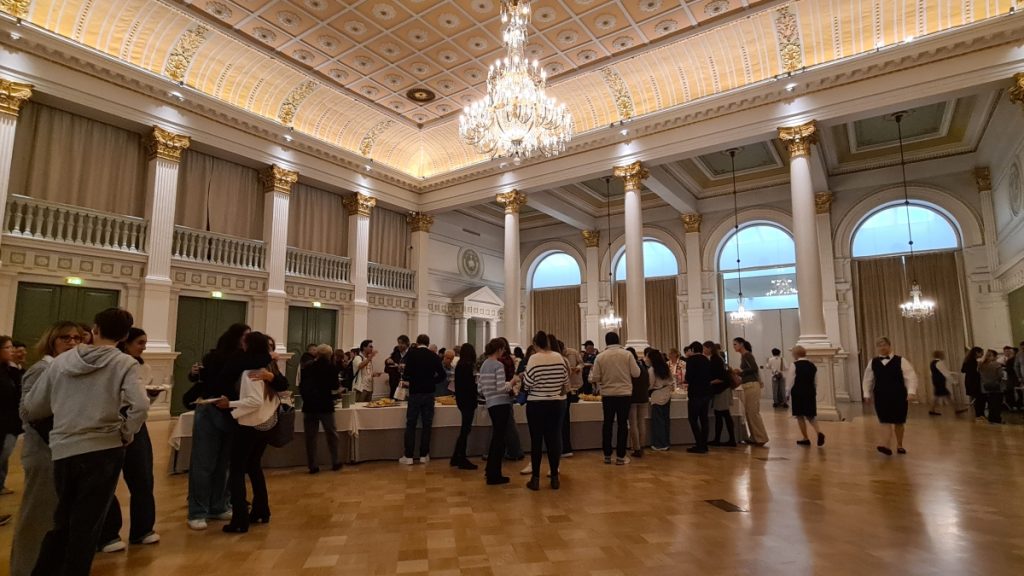
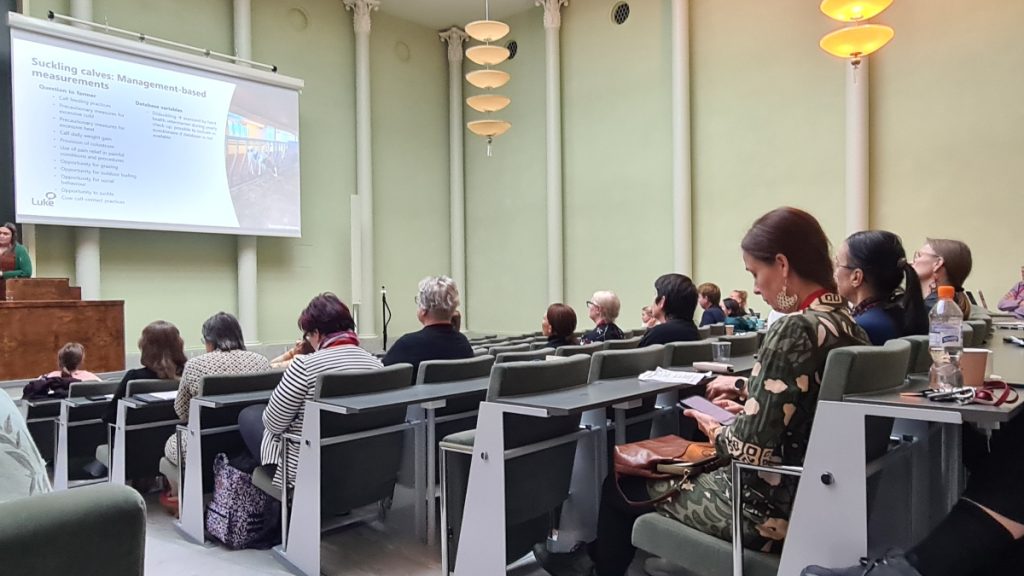
The EVCBMAW-conference took place on September 18-19, 2025 in Helsinki. Finland. The conference venue was the beautiful main building of Helsinki University, a renowned Empire-style building from year 1832, and situated at Helsinki city centre.

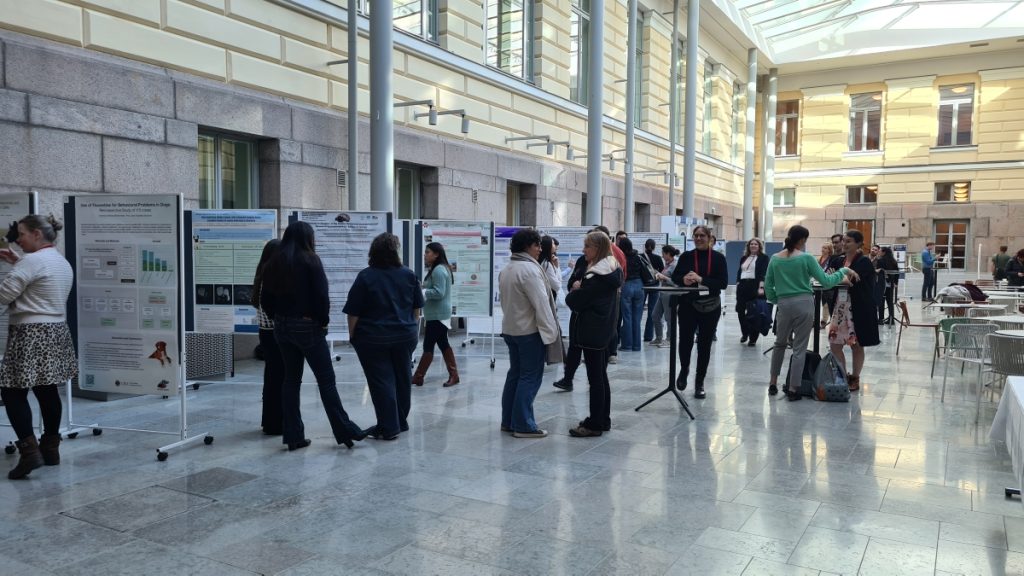
With the 275 participants from 32 countries, the EVCBMAW-conference was truly international. A total of 110 studies were presented, equally divided between oral and poster presentations. Topics ranged from farm animal welfare to human-pet relationship. Also topics explored possibilities to improve the human-animal interactions by better animal handling practices or by medication. For anyone interested, the conference webpages offer the full program and abstracts of posters and presentations at https://evcbmaw.org/#welcome.
Scientific insights on animal cognition and human–animal interaction
Science is still revealing new lessons on animal cognition, learning skills and welfare-related behaviours, which can then be utilized in improving the quality of interactions between animals and human.
Understanding Cognitive Abilities
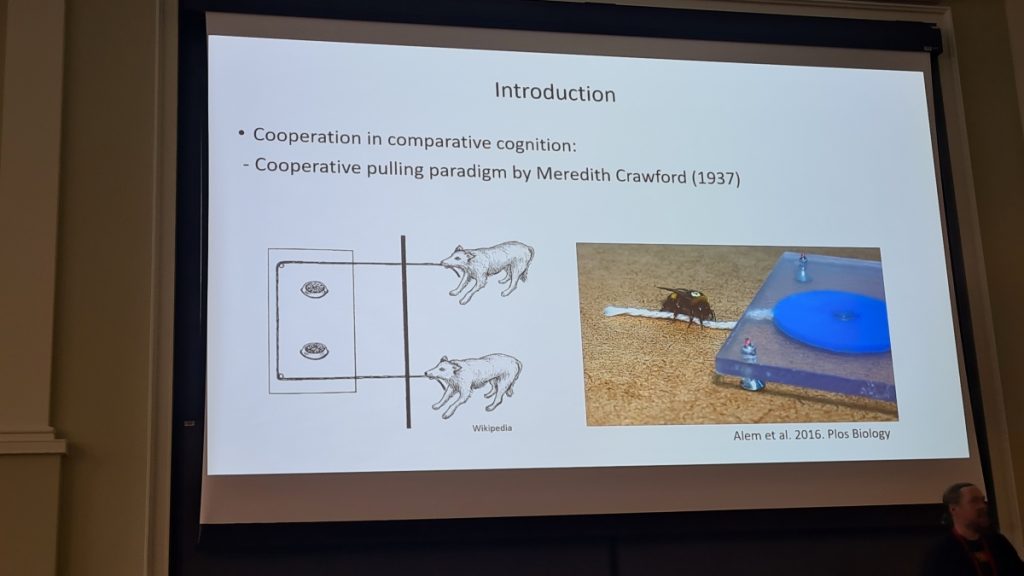
In his plenary lecture, Dr. Olli Loukola (University of Oulu, Finland) compared the cognitive skills of vertebrates and insects, demonstrating that even very small species can problem-solve and collaborate for shared benefit.
One Welfare: the interconnectedness of Humans, Animals, and Nature
Another plenary lecture by Dr. Miiamaaria Kujala defined the One Welfare concept, emphasizing how animal welfare, biodiversity, and human wellbeing are deeply intertwined. The connection is especially tight with pet dogs and their owners, which share the same house, activities, and food, but also emotions and even microbiota. The quality of the interaction and the perceived happiness is affected by the physical and physiological health of both partners. According to Dr. Kujala, we need empathy for recognizing animal experiences, but also knowledge and accuracy, for not ending up into anthropomorphic assumptions and other misinterpretations.
Cow–Calf Contact Systems in Dairy Production
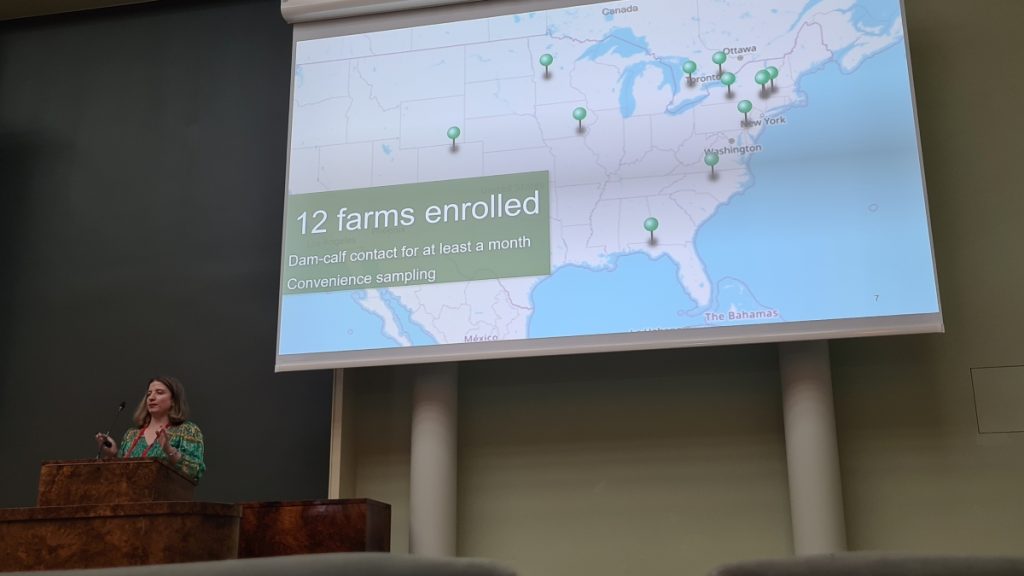
One of the farm animal -related topics was cow-calf contact (CCC) systems in dairy farms in Europe and the North America, as depicted in three oral presentations. Although intuitively favoured by many consumers in questionnaire studies, the practice is often considered tedious and costly, because it may decrease the milk yield and necessitate extra supervision especially in robotic milking systems. The CCC studies presented at EWBMAW reported many benefits of CCC systems, and stated that farmers rarely wish the abandon the system after applying it for a while. According to the presentation by Dr. Emeline Nogues, the farmers saw benefits of the CCC systems on job satisfaction, labor, and finances.
Medication safety in pig farms
Dr. Kati Tuomola from the University of Helsinki reviewed veterinarian’s perceptions of medication safety risks and defences in sow farms. She showed several critical points in which the decision or practice of sow medication in farms can be suboptimal. Identifying the key medication safety risks can lead to the development of targeted protocols to promote animal welfare in pig farms. According to Dr. Tuomola, the key to successful and correct sow medication is education and advice from the veterinarian to the farm owner and farm manager.
Welfare offences during animal transport
Presentation by Mette Hersking and Kirstin Dahl Pedersen from University of Copenhagen described a new project which will examine veterinary evidence in legal cases of animal welfare offences in animal transport. A huge amount of animal transport takes place in the world. In Denmark alone, a total of 30 million pigs are either exported or transported to slaughterhouse every year. Although guidelines for good transport practices exist, they give space for subjective interpretations. The project, which deals with transport of all farm animal species, will dig into legal cases of animal welfare offences in order increase the understanding on current practices and interpretations around animal welfare offences.
Medication practices in finnish dairy calves
Some of the presentations discussed the practices of medication of animals with specific health issues. The usage of NSAIDs and antibiotics on Finnish dairy calves was presented by Dr Outi Hälli from the University of Helsinki. The data, which was collected by Dr. Atte Sandelin for his doctoral thesis, included over 28,000 calves transported to 86 rearing farms. This study revealing that:
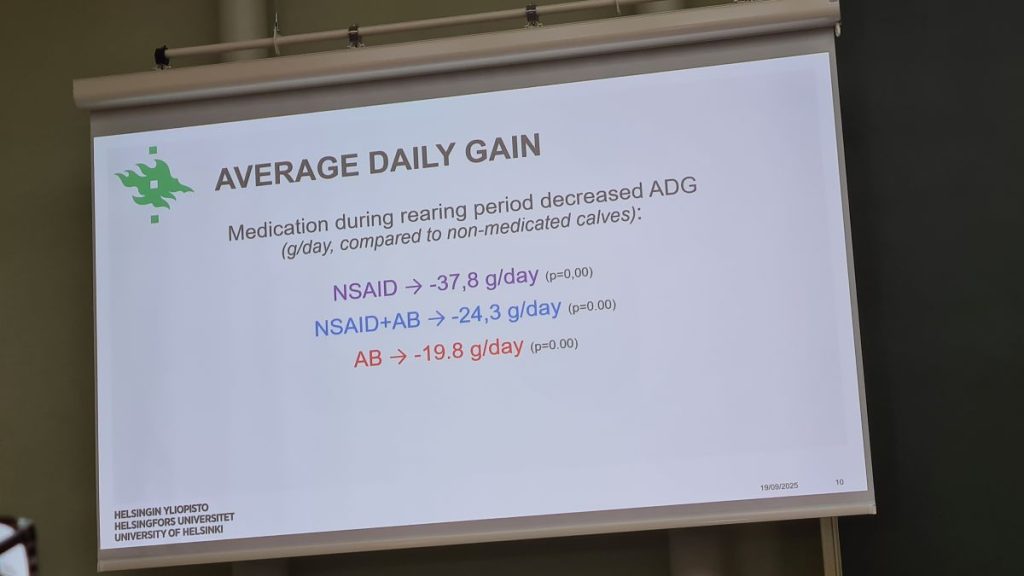
- around 60% of calves received medication (antimicrobials, NSAIDs or both)
- medication needs were linked with reduced weight gain
- respiratory tract infections were the most common reason for treatment
- re-medication was most common when only NSAIDs were used initially
Conference takeaways
The EVCBMAW2025 conference offered a comprehensive overview of current research trends, challenges, and innovative approaches in animal behaviour and welfare.
Its strong focus on both scientific understanding and practical application reflects a growing global emphasis on treating animals as individuals- each with their own needs, emotions, and cognitive abilities.
Related
-

Coniferous rosin-based soap against Eimeria oocysts: Join Hankkija’s presentation at EPC 2024
-

Progres® Liquid: Advancing disease resistance and growth performance in Asian Seabass – Aquaculture Europe Conference 2023
-

Progres® studies to be presented at Aquaculture Europe 2023 conference
-

Hankkija has sold the Progres® feed innovation business to AB Vista
-

Progres® and Progut® in the weaner diet increased piglet resilience to F4-ETEC in the post-weaning period – A poster from Schothorst Feed Research at the ZeroZincSummit2022
-

Raising piglets without medical ZnO – an example from Finland
-
Resipro® Foam put to the test at Kukkala’s backyard chicken farm
-
European Veterinary Congress of Behavioural Medicine and Animal Welfare 2025
-
Hankkija at Sikaseminaari 2025: Strengthening swine biosecurity and feed safety
-
Progut® Extra proven to reduce Salmonella pressure in broilers
-

Aquaculture Europe 2025 Conference in Valencia, Spain
-

Dietary fiber: the natural key to gut balance and performance in pigs and poultry